

Transparent communication is always important, but even more so in times of layoffs and restructuring. During rough times, employees look to leaders for clarity, reassurance and honesty.
In many companies, however, communication becomes less frequent during turbulent times, not more. Often, executives wait weeks or even months between updates, trying to avoid saying the wrong thing or speaking before everything is final.
The critical disconnect between employees’ need for clarity and the leadership’s willingness and preparedness to actually address people’s concerns creates a vacuum that employees often fill with speculation, rumors, worst–case scenarios and fear.
The all-hands anxiety circle
If there’s no safe place to raise questions or information is scarce, employees’ concerns build up and, by the time the all-hands comes, the Q&A explodes with harsh or emotionally charged questions.
These questions, often submitted anonymously, are not merely ’venting’ but represent deeply held fears and frustrations that have had no other safe outlet. Leaders, however, may feel attacked or derailed, and often try to regain control by limiting anonymity, shortening Q&A time or avoiding questions altogether.
This is a lose–lose situation. Employees feel unheard, trust erodes, anxiety increases and so the cycle repeats.
We call this the all-hands anxiety circle.
Breaking this cycle requires proactive, transparent and psychologically safe communication. The challenge isn’t simply managing Q&A sessions; it’s rethinking how the organization fosters ongoing, empathetic connection and addresses concerns before they escalate.
Below is a practical, deeply actionable guide to help leaders prepare for crisis communication, navigate the tough questions and (re)build trust during layoffs or organizational restructuring.
(Note: All of these tips are tried, tested and used by us at Slido as we’ve gone through restructuring ourselves in the past.)
1. Increase the cadence of communication – don’t necessarily wait for the next all-hands meeting
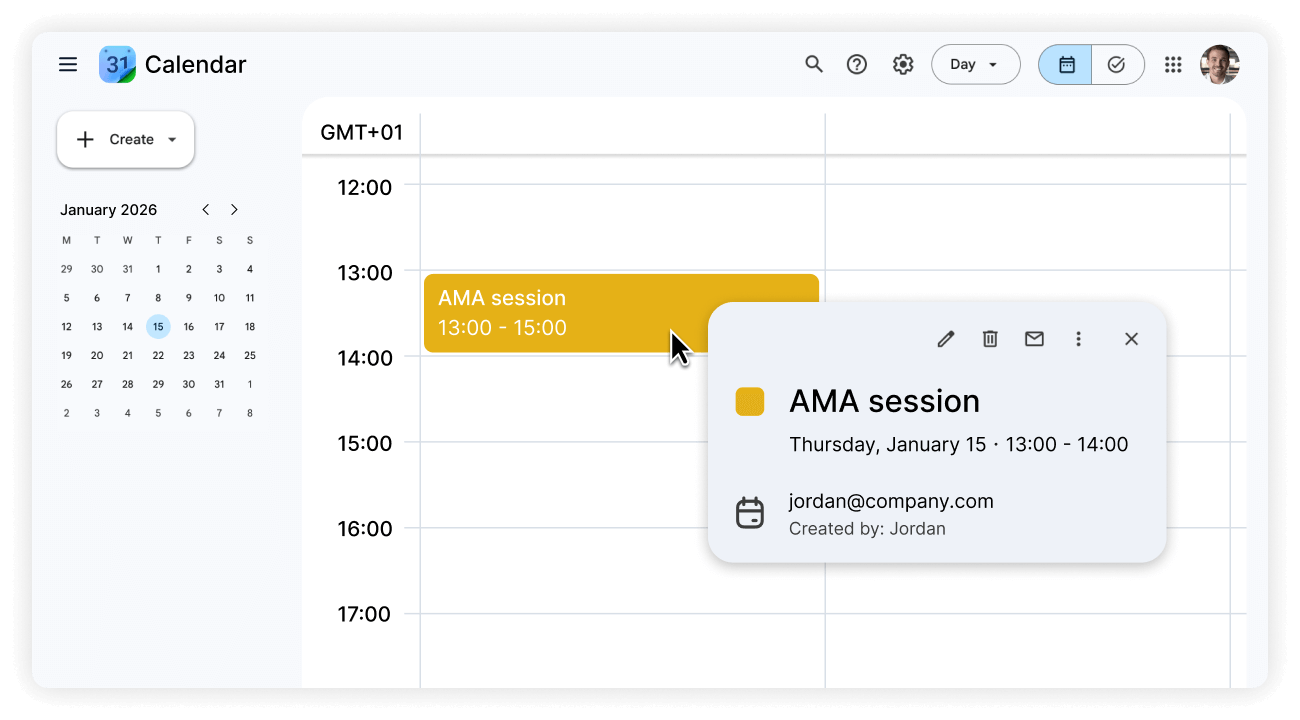
During uncertainty, employees need frequent, predictable touchpoints with leadership. Employees’ anxiety doesn’t wait for the next quarterly all-hands; it begins the moment change is announced.
Quarterly all-hands meetings are far too sporadic. Even monthly all-hands may not be enough. Serious changes, such as layoffs or restructuring, deserve their own dedicated communication moments.
How to do it:
- If you run all hands meetings on a quarterly basis, change it to at least a monthly basis.
- Organize a special session with clear explanations and Q&A shortly after the changes have been announced.
- Use a mix of formats to supplement all-company meetings: written updates in internal communications channels, video messages, small-group sessions, manager-led pulse checks. In peak periods of change, consider bi-weekly or weekly short updates.
- Share what you know even if you don’t have all the answers yet. Silence is interpreted as bad news or avoidance and can impact employee trust.
Why it matters:
More frequent communication reduces the buildup of anxiety and stops the Q&A from turning into an emotionally-driven venting space.
2. Empower managers to run team-level check-ins
C-suite executives can’t be in every conversation, but managers can. Managers and team leaders are the closest to those impacted by restructuring and employees often feel safer expressing concerns in smaller forums with people they trust or work with on a regular basis.
Encourage and equip functional leaders and managers to host more frequent, informal ’check-in’ or town halls within their teams or departments. Reserve the large all-hands for strategic vision and major all-company announcements. Smaller, team-level meetings often feel less intimidating and allow for more direct, nuanced conversations.
How to do it:
- Encourage managers to run regular, informal ‘team check-ins’ or mini town halls.
- Give them talking points, context and suggested Q&A guidance.
- Create alignment between what leaders say in all-hands and what managers discuss in teams.
- Put the messaging into what it means for these people specifically so they understand the impact better
Why it matters:
Smaller groups feel less intimidating, build trust faster and give employees a chance to ask nuanced questions before they escalate.
Read more: A team leader’s guide to quick pulse checks that actually work
3. Pre-collect questions to uncover the most burning topics and prepare your answers in advance
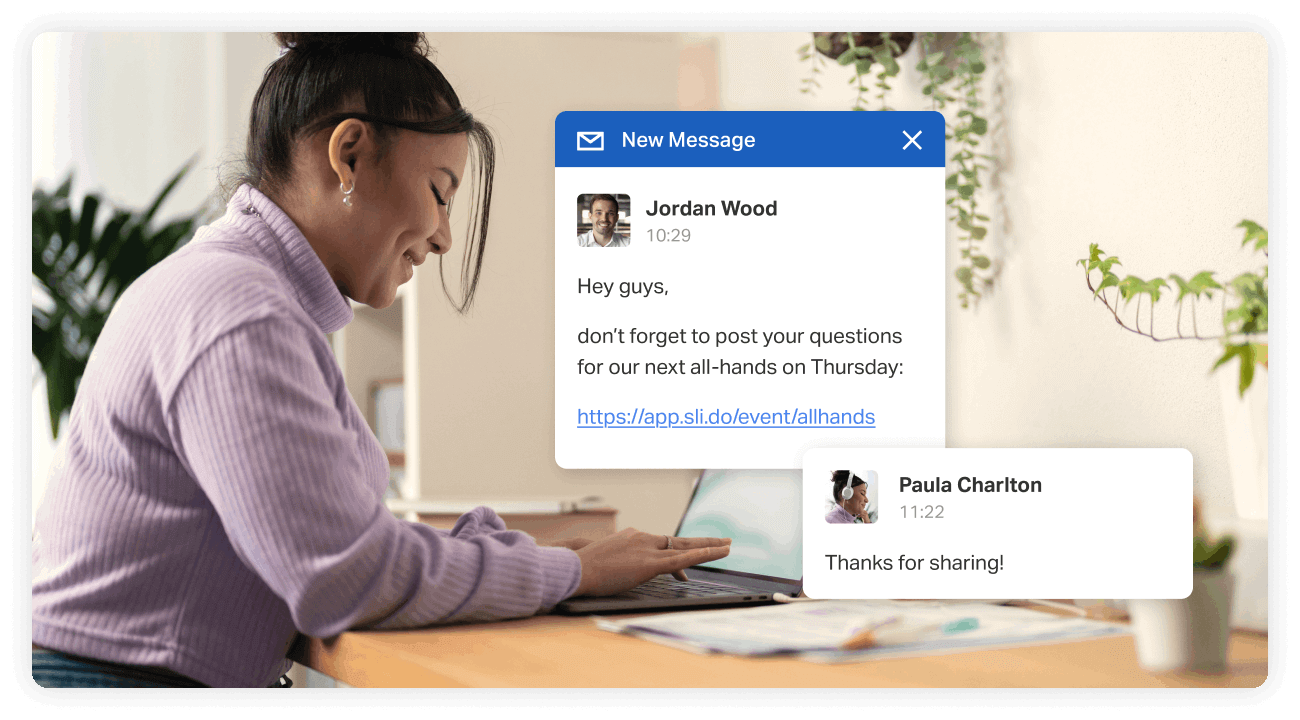
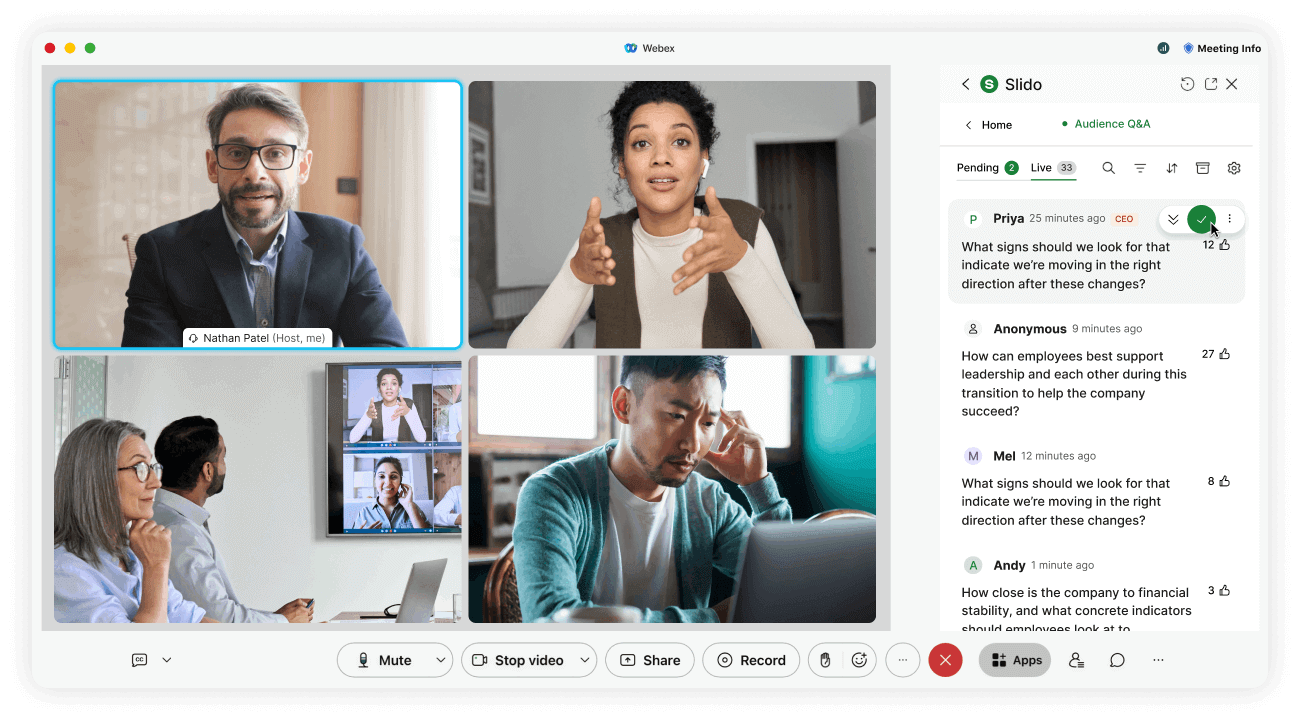
Seeing tough questions for the first time during a live all-hands puts leaders on the defensive. Collecting questions ahead of time allows leaders to prepare thoughtful, accurate and empathetic responses. Try collecting employee questions a few days/hours in advance, for example through Slido Q&A. You can also allow people to send questions anonymously so nobody is worried about retribution.
We always collect questions from our employees days before the all-hands meeting. In times of turmoil, answering people’s questions is one of the main reasons we organize an all-hands in the first place.
It’s good practice to allow employees to ask questions throughout the meeting as well, to enable them to follow up on things discussed during the meeting.
If you run out of time, or too many questions have come to answer in one session, address the remaining questions after the meeting in writing or schedule a follow up session. It shows respect for employees and ensures nothing falls through the cracks.
How to do it:
- Open a Slido Q&A before the meeting, share the Slido link in your internal communication channel and let employees submit questions (anonymously).
- Invite upvotes so recurring concerns rise to the top.
- Prepare structured answers in advance – even for the hard questions.
- Keep Slido open during the meeting for real-time questions as well.
Why it matters:
Gathering questions in advance will help you gauge the topics the team wants to discuss, and better prepare the executives for the Q&A.
Read also: 4 Reasons to Run an Anonymous Q&A (+1 Reason Not To)
4. Create ‘always-on’ safe channels for questions
Sometimes, people need an immediate outlet. You don’t have to wait for the next meeting to allow people to voice their concerns. Create space for employees to ask questions asynchronously as soon as they arise.
Keep Slido Q&A open without a time limit or create a special channel in your internal communication tool, such as Slack, Webex or Teams.
Anonymous Q&A with Slido allows employees to submit questions anonymously, upvote others’ questions and ensures the most pressing concerns rise to the top. Leaders can see the collective sentiment and prepare to address critical issues ahead of the meeting, ensuring all voices are heard.
How to do it:
- Use an always-open Slido Q&A for anonymous submissions.
- Share it in Slack, Teams or your intranet.
- Check and respond regularly, even between formal sessions.
Why it matters:
This acts as a pressure release valve, preventing the accumulation of anxieties. Concerns don’t pile up, and leaders get a continuous pulse on sentiment.
5. Use short personal video updates, not just emails
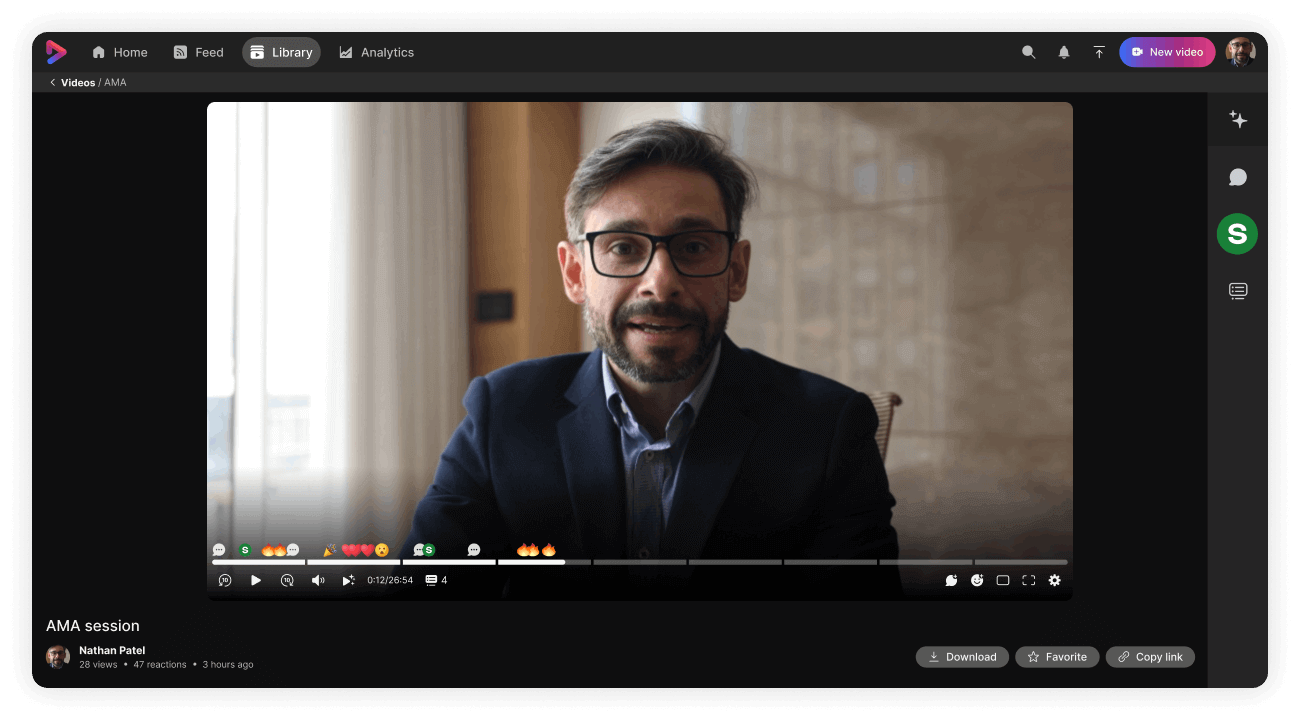
Instead of sending out emails or waiting for live meetings, record and share short, personal video messages. You can use tools like Vidcast to record and share news and updates. This adds a human touch, allowing leaders to explain complex changes, provide context, address common FAQs or simply offer reassurance in a way text alone can’t.
On top of that, it allows leaders to model vulnerability, and ensure employees can consume content on-demand, reducing the need for constant live meetings.
How to do it:
- Record short, candid video updates explaining changes, for example through Vidcast.
- Share “Here’s what we know today” messages to build trust.
Why it matters:
In difficult times, employees want to see and hear their leaders. Text updates can feel cold and corporate and can easily be misinterpreted.
6. Model vulnerability and transparency
Harsh questions usually arise when employees perceive a lack of transparency in the company. Employees don’t need perfection from leaders; they need honesty.
Leaders should acknowledge uncertainty where it exists, share the rationale behind decisions and actively solicit feedback, demonstrating that all questions are valid. Leaders often avoid saying “I don’t know yet,” but during restructuring, this is sometimes the most honest answer.
When leaders model vulnerability, such as admitting when they don’t have all the answers, they set a clear standard for honest communication. Acknowledging challenges signals that it’s safe to ask questions and share feedback, creating an environment where employees feel comfortable speaking up.
How to do it:
- Acknowledge uncertainty instead of overpromising.
- Explain the “why” behind decisions, not just the “what.”
- Validate tough feelings: fear, loss, frustration.
- Share where feedback has influenced decisions.
Why it matters:
When leaders show vulnerability, employees feel safer expressing concerns, and harsh questions turn into constructive dialogue.
7. Leverage data to understand sentiment and improve communication
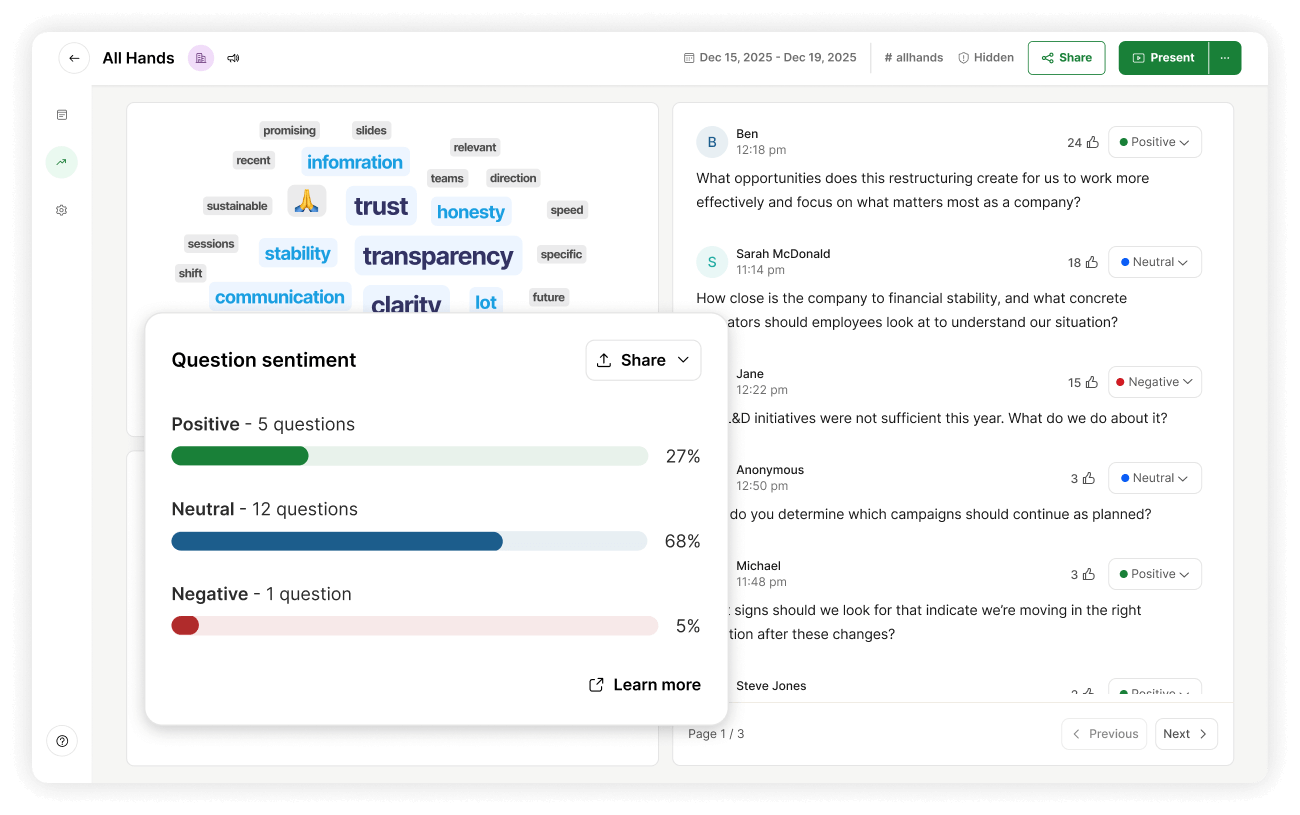
Tough questions aren’t just questions; they’re also data. Don’t just answer them, learn from them. Analyze the types of questions being asked across all touchpoints to identify recurring themes, areas of confusion and overall sentiment.
This data is invaluable for refining communication strategies and addressing the root causes of anxiety.
To provide ongoing clarity and support, turn recurring questions into a living FAQ document. By regularly updating this resource with answers to common concerns and new developments, employees have easy access to accurate, up-to-date information. It gives employees easy access to clear, up-to-date information, reduces confusion and shows that you’re responsive to their needs.
How to do it:
- Analyze themes from Slido Q&A questions over time. You will find aggregated themes in your Slido reporting.
- Track recurring topics and misunderstandings.
- Turn top themes into a living FAQ document.
- Share updated answers frequently so everyone has a single source of truth.
- Adjust your communication to include employees’ concerns and meet their needs
Why it matters:
When employees know where to find answers, there’s less space for speculation and rumors.
8. Create separate spaces for different topics
When a big topic like layoffs or restructuring dominates conversation, it can overshadow everything else. Yet you still need all-hands meetings to align on other areas of the business.
Once the initial round of communication around layoffs or restructuring is complete, create separate spaces dedicated to that specific topic (e.g., restructuring). These spaces can serve as centralized information hubs where you store all relevant documents, FAQs, policies and recordings of previous discussions. A dedicated space or meeting allows the conversation about the difficult topic to continue without dominating every company-wide forum.
It can also be a place where people can ask questions or discuss issues as they arise. A Slack channel, a Webex space, or a Sharepoint page – it’s up to you. This provides a single source of truth, reducing information fragmentation and ensuring everyone has access to the latest, most accurate context.
How to do it:
- Set up separate communication spaces dedicated to specific topics.
- Organize dedicated sessions (company-level, department-level, and team-level) specifically for restructuring-related questions.
- Use the all-hands for vision, planning, and context, without dismissing people’s concerns.
- Redirect respectfully:
“This is an important topic and we’ve created a dedicated forum to discuss it in depth so we can give it the time it deserves.”
Why it matters:
You will keep acknowledging and addressing employee’s concerns on the hard topic without letting it derail every conversation within the company.
Breaking the all-hands anxiety circle
The real challenge during layoffs or restructuring isn’t managing a difficult Q&A; it’s rebuilding trust. When leaders communicate openly, frequently and empathetically, employees feel heard, informed and supported.
By adopting the practices laid out in this article, enterprises can transform the ‘all-hands anxiety cycle’ and foster a culture of connection, trust and informed engagement. Employees feel heard and valued, leaders gain meaningful insights, and the organization can navigate change more transparently and effectively.
Transparency isn’t just good communication. It’s the foundation of trust, especially when your team needs it most.